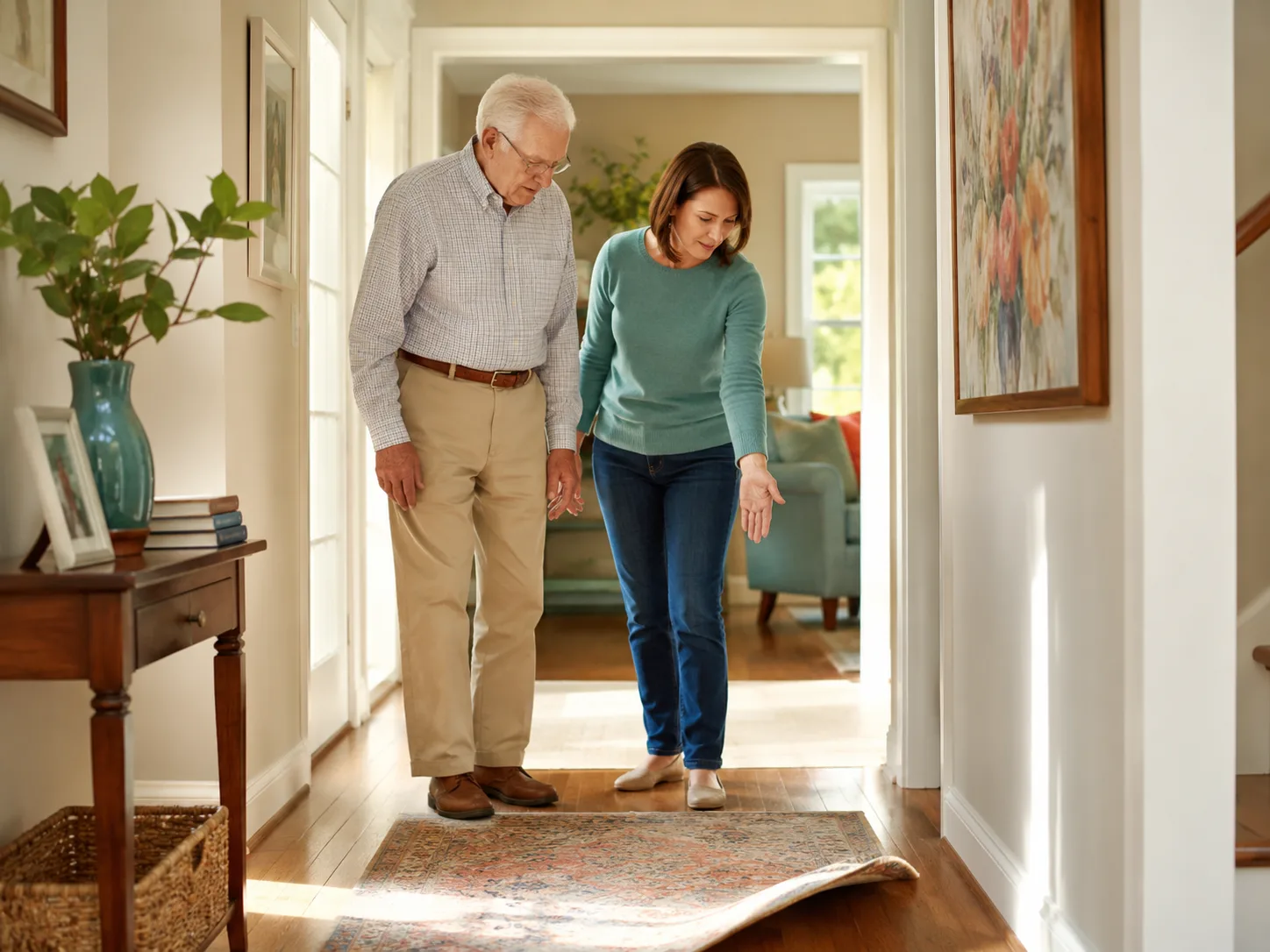
The route through the house
Pathways blocked by clutter, curled rugs, poor lighting, and furniture being used for support.
 FOREVERYOUNGHome Care
STEADY SUPPORT FOR GREATER CONFIDENCE
Changes in balance, strength, endurance, vision, or confidence can make familiar routines feel uncertain. A hallway, a bathroom trip, a front step, or the move from bed to chair may take more time and more support than it once did.
Forever Young provides non-medical mobility assistance based on the approved care plan.
Our role is to offer a steady presence, help with established routines, notice meaningful changes, and support the ability to stay engaged in daily life.
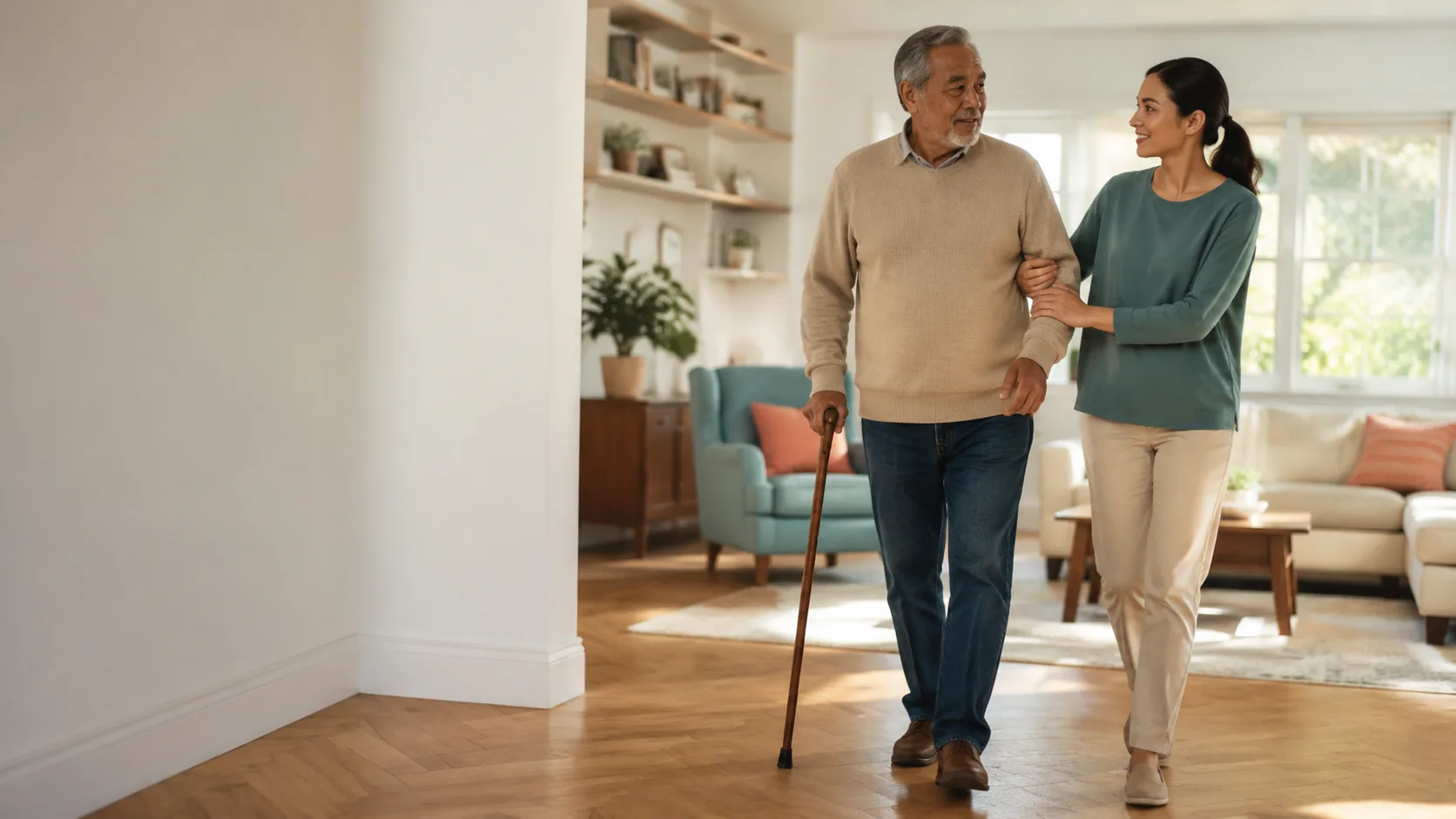
MOBILITY AND SAFETY SUPPORT
Most falls happen during ordinary movements rather than dramatic ones. Standing up, turning around, and reaching for something just out of range account for far more than walking does.
Bathrooms and hallways concentrate the risk in a house: hard surfaces, tight turns, poor light. So does the middle of the night, when balance and confidence are both at their lowest.
Discuss Mobility SupportWHAT IT COVERS
A new or sudden change in mobility may require medical evaluation. Non-medical care is never a substitute for that assessment.
CONFIDENCE, NOT DEPENDENCE
Wherever it is appropriate, caregivers allow time for someone to do what they still can. Assistance may begin with setup, cueing, or simply standing nearby, and increases only to the level the care plan sets out.
Someone who trusts they can still get to the kitchen keeps getting to the kitchen. That is what protects strength over months rather than days.
EVERYDAY SAFETY AWARENESS
Pathways blocked by clutter, curled rugs, poor lighting, and furniture being used for support.
Frequently used items stored too high or too low, and wet floors in the bathroom or kitchen.
Shoes or slippers that look unstable, and any change in how an established mobility aid is being used.
CLEAR ABOUT OUR SCOPE
Our caregivers do not evaluate gait, prescribe exercises, fit mobility devices, provide rehabilitation, or design clinical transfer techniques. Those require appropriately licensed professionals.
No provider can guarantee that a fall will not happen. What we offer is fall-risk awareness, safer routines, and mobility assistance within our scope.
QUESTIONS FAMILIES ASK
Non-medical support can help with daily routines, meals, mobility, reminders, and household tasks once someone is home. Skilled nursing, therapy, wound care, and clinical rehabilitation must come from appropriately licensed professionals.
Caregivers can assist with established mobility devices where the task is in the care plan, the device has been properly selected, and the assistance is permitted by law and our policy.
No company can guarantee fall prevention, and you should be wary of one that says otherwise. Caregivers provide standby assistance, follow the care plan, encourage safer routines, and report hazards and changes they observe.
Sudden weakness, a new inability to stand, or a fall with possible injury may need immediate medical attention. Caregivers follow emergency and reporting procedures rather than trying to work out the cause themselves.