We do not argue with the memory
If your mother believes it is 1962, correcting her wins nothing and costs her a great deal. We meet the person where they are and move gently on.
 FOREVERYOUNGHome Care
MEMORY CHANGES. THE PERSON REMAINS.
A dementia diagnosis changes what someone can remember. It does not change who they are, what they love, or their capacity to enjoy an afternoon.
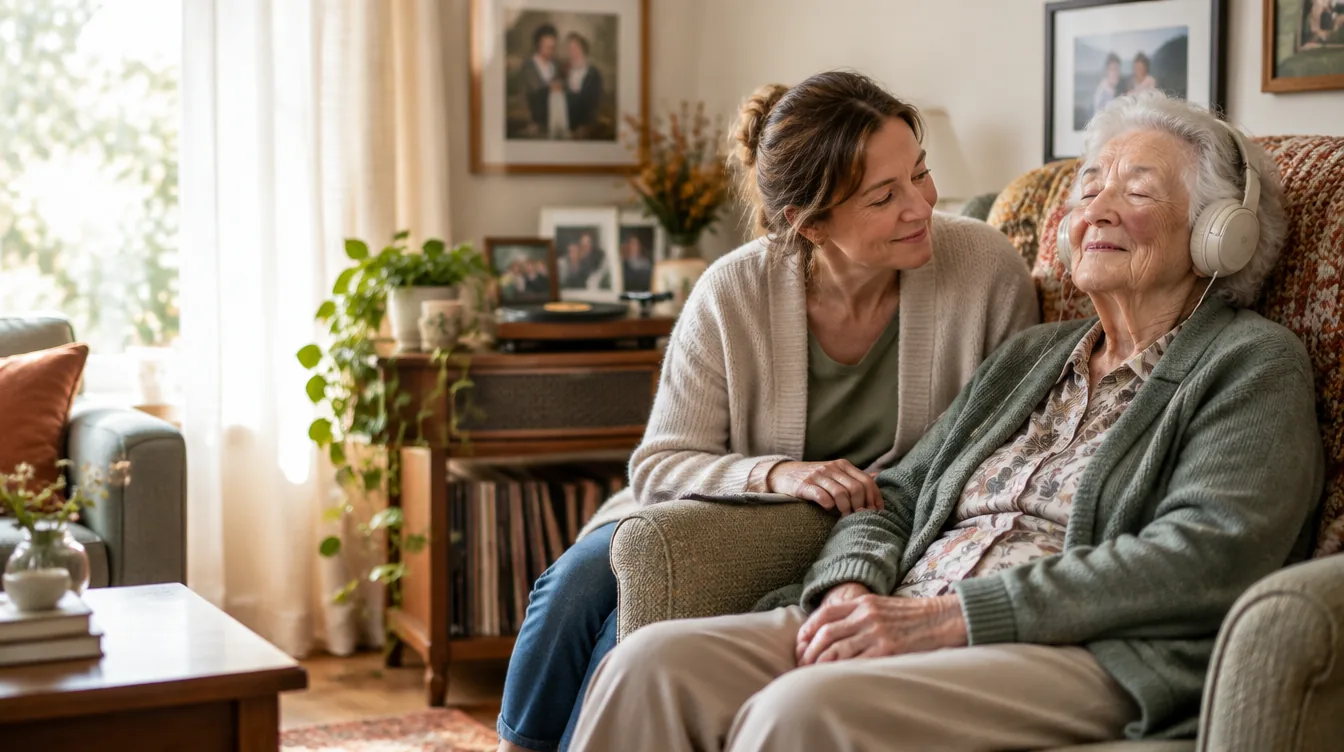
Forever Young was started by a daughter caring for her own mother, who is ninety-three, lives with dementia, and still dances in the front room when the music is right. That is not a marketing line. It is the reason this company exists.
Our dementia care is non-medical. It is about familiar routines, patience on hard days, and a caregiver who knows the difference between correcting someone and steadying them.
DEMENTIA CARE
Non-medical dementia care supports the ordinary shape of a day when memory, judgment, or orientation have changed. It covers routines, meals, personal care, safety around the home, and company, delivered by someone trained to expect repetition, confusion, and changes of mood without treating them as a problem to be argued with.
It is not treatment. No one at Forever Young diagnoses dementia, stages it, prescribes for it, or promises to slow it. What we can do is make the hours calmer and more familiar, and give the family a reliable account of how those hours went.
Talk About Dementia CareWHAT IT COVERS
What is appropriate depends on the person, the stage they are at, and what has been agreed in the care plan.

WHAT DEMENTIA DOES NOT TOUCH
Dementia and Alzheimer's blur the details of yesterday. They do not erase humor, warmth, preference, dignity, or the pleasure of a familiar song. Families see this constantly and are rarely told it matters.
Care built on that fact looks different. The caregiver is not managing a decline; they are spending time with someone who is still entirely present, and shaping the day so that being present is easier.
HOW WE WORK ON A HARD DAY
If your mother believes it is 1962, correcting her wins nothing and costs her a great deal. We meet the person where they are and move gently on.
Same order, same times, same cup. Familiar structure removes a hundred small decisions that have become tiring, and much of the day's distress with them.
If something changed, you hear it the same day, in ordinary words, without alarm and without softening.
CLEAR ABOUT OUR SCOPE
Forever Young provides non-medical care. We do not diagnose or stage dementia, provide skilled nursing, administer medication, deliver behavioral therapy, or supervise a secured memory-care setting.
Some needs sit outside what non-medical home care can safely cover, including continuous clinical monitoring and situations where someone's safety depends on secured premises. If your family is close to that line, we will say so plainly rather than take the work and hope. A physician, a geriatric care manager, or the Orange County Office on Aging can help you find the right level of care.
QUESTIONS FAMILIES ASK
It is one of the most common situations we are asked about, and it is not stubbornness. Many people with dementia genuinely do not perceive the change. We introduce a caregiver as company or as help around the house rather than as supervision, and let trust build over several visits. Forcing the point tends to set things back.
Consistency matters more in dementia care than in any other kind, because a familiar face does work that no amount of skill replaces. We schedule for continuity wherever caregiver availability allows, and we tell you honestly when it cannot.
Late-day restlessness is common and exhausting for families. Care scheduled through that window, with the same routine each evening, is often the single most useful thing we do. We also provide overnight and 24-hour care as rotating shifts, so the evening does not have to end with you on your own again.
It depends entirely on the situation, the home, and what supervision would be required. Non-medical home care cannot make an unsecured house secure. We will assess it honestly with you and say no where no is the right answer.
Yes. Most dementia care plans also include personal care, meal preparation, household help, and respite for the family. It is usually one caregiver doing all of it, which is exactly how it should be.